Only a few days left to make it a Christmas gift · Order before Dec 15
Free shipping on orders over $365/€319
14-Day Returns* · 2-Year Warranty · Worldwide Shipping, US Included
Want it under the tree? · Order before Dec 15
Free shipping on orders over $399/€350
14-Day Returns*
2-Year Warranty
Worldwide Shipping, US Included
The first chapter introduces the basic concepts of immunology, including the definition of the immune system, its functions, and the types of immune responses. The authors explain the importance of immunology in understanding various diseases and developing new treatments.
Chapters 13 and 14 discuss the immune responses to various pathogens, including bacteria, viruses, and parasites, as well as tumors. The authors explain how the immune system responds to different types of pathogens and how these responses can be impaired or evade the immune system. Inmunologia Celular Y Molecular Abbas 8 Edicion.pdf
This chapter describes the effector mechanisms of immune responses, including the elimination of pathogens by phagocytic cells, the activation of complement, and the production of cytokines. The first chapter introduces the basic concepts of
The final chapter discusses the immunology of transplantation and cancer, including the principles of transplant rejection and the development of cancer immunotherapies. The authors explain how the immune system responds
The next two chapters describe the cells and tissues of the immune system, including hematopoietic stem cells, lymphocytes (T cells and B cells), dendritic cells, macrophages, and other immune cells. The authors discuss the development, structure, and function of these cells and tissues.
Chapters 4 and 5 cover the innate and adaptive immune responses, respectively. The authors explain the mechanisms of innate immunity, including the recognition of pathogens by pattern recognition receptors and the activation of inflammatory responses. They also discuss the adaptive immune response, including the activation of T cells and B cells, the production of antibodies, and the development of immunological memory.
The book is divided into 16 chapters, which cover the basic principles of immunology, the cells and tissues of the immune system, and the immune responses to various pathogens. The authors have made significant changes to the 8th edition, incorporating recent advances in the field and updating the references to reflect current research.
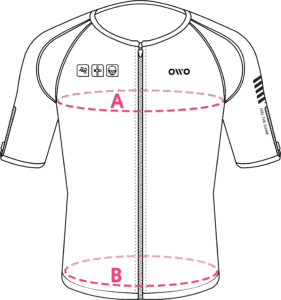
Measure your chest (A) and hips (B) following our indications.
The reference measurement will always be the larger of the two (A or B).
Look in the chart to which size corresponds to that measurement.
| Size | Reference measurements | |
|---|---|---|
| Inches | Centimeters | |
| 2XS | 25.6 – 29.4 | 65 – 74 |
| XS | 29.5 – 32.6 | 75 – 82 |
| S | 32.7 – 36.1 | 83 – 91 |
| M | 36.2 – 39.7 | 92 – 100 |
| L | 39.8 – 42.8 | 101 – 108 |
| XL | 42.9 – 46.3 | 109 – 117 |
| 2XL | 46.4 – 49.9 | 118 – 126 |
| 3XL | 50 – 53 | 127 – 134 |
| 4XL | 53.1 – 55.9 | 135 – 142 |