To see accurate pricing, please choose your delivery country.
 
 
Poland
€ EUR
All Shops

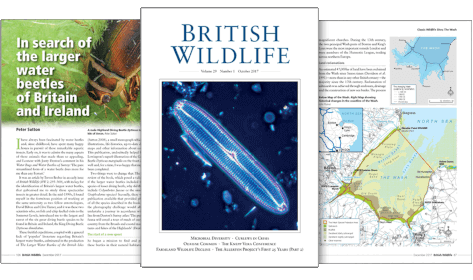
British Wildlife

8 issues per year 84 pages per issue Subscription only

British Wildlife is the leading natural history magazine in the UK, providing essential reading for both enthusiast and professional naturalists and wildlife conservationists. Published eight times a year, British Wildlife bridges the gap between popular writing and scientific literature through a combination of long-form articles, regular columns and reports, book reviews and letters.

Subscriptions from £33 per year

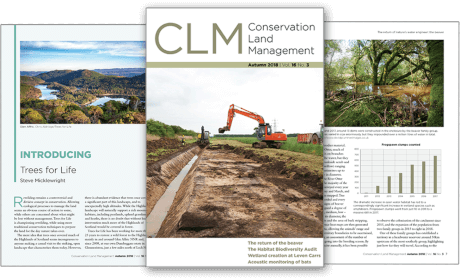
Conservation Land Management

4 issues per year 44 pages per issue Subscription only

Conservation Land Management (CLM) is a quarterly magazine that is widely regarded as essential reading for all who are involved in land management for nature conservation, across the British Isles. CLM includes long-form articles, events listings, publication reviews, new product information and updates, reports of conferences and letters.

Subscriptions from £26 per year

Horrorporne50zombiestrikethefinalchapter Updated Apr 2026

Conclusion The title compels a hybrid work: gothic horror reframed through internet-age anxieties about corrupted archives, viral contagion, and the ethics of storytelling. A final chapter that honors these tensions — delivering atmospheric dread, moral clarity, and formal playfulness — would provide fitting closure: not a tidy ending, but an act of witness that acknowledges stories continue to be rewritten. The "update" isn’t merely a revision; it’s the necessary evolution of myth in a world where memory and media are inseparable.

Title as Tone-Setter The title’s syntactic collage — a blend of "horror," an allusion to Poe, a leetspeak flourish, and the bluntness of “zombie strike” and “final chapter” — signals several things. First, it foregrounds genre play: readers should expect horror conventions (decay, dread, the uncanny) refracted through self-aware or ironic lenses. The "Poe" fragment evokes gothic sensibilities and psychological terror; the "RNe50" segment reads as digital residue, hinting at internet culture, remixing, and perhaps a story told through found media or corrupted files. The grandiosity of “The Final Chapter” stakes a claim to closure, while “updated” implies iterative history: this is a tale that has been revised, patched, or rebooted — itself a commentary on modern mythmaking, where endings are often provisional.

Cultural Reading: Why This Matters "HorrorPoeRNe50ZombieStrike: The Final Chapter (Updated)" is more than a quirky title; it can serve as a mirror for our media-saturated age. Zombies become a metaphor for viral content and the erosion of shared reality. The "updated" suffix captures our era’s compulsive revisionism — where narratives are constantly patched, remixed, and reissued. A final chapter that embraces both the gothic and the digital offers a way to reckon with how we memorialize catastrophe and how stories themselves can heal or harm.

"HorrorPoeRNe50ZombieStrike: The Final Chapter" reads like the fevered culmination of an internet-born mythos — a mashup title that promises both parody and apocalypse. At once ridiculous and evocative, the name suggests a story that straddles horror, satire, and postmodern pastiche: an online-born cultural artifact transposed into narrative form. This essay examines how such a title frames reader expectations, the themes it invites, and how a coherent final chapter might deliver emotional payoff while honoring the chaotic energy implied by the phrase "updated."