Gspace32 Access
GSpace32 was not merely a workshop or a lab. It was a curator of possible futures: a place where neglected ideas were given room to grow and where the fragile inventions of lone tinkerers were taught to speak to the world. The founders—an archivist of failed tech, a former aeronautics engineer who had learned to paint, and a poet who coded in the margins—built it on one principle: a bold synthesis of craft and compassion. They called it GSpace32 because when they first scrawled names on a whiteboard, that was the number that looked like a promise.
Chapter 4 — Translations The sensor’s project multiplies. It becomes a tool for communities to reclaim technology’s ghosts: abandoned traffic cameras repurposed as weather storytellers; old marine radios that speak in lullabies about lost coasts; an antique observatory reconfigured as a social space for migrants who remember other skies. GSpace32 teaches a generation to read machines not as cold arbiters, but as relatives with histories. It changes how policy makers think about infrastructural grief. gspace32
GSpace32 itself evolves. It becomes a lab that refuses tidy outputs. Funders learn to ask for narratives as proof of impact—stories of how an array of failed satellites became an oral archive for a port city; how a civic sensor prevented a neighborhood’s lights from failing during a flood. The place that began as a refuge for failed tech now influences procurement committees and curricula. Small teams from elsewhere come to see how one space stitched value back into the neglected. GSpace32 was not merely a workshop or a lab
GSpace32 first opened its shutters on a night when the constellations seemed unfinished. It sat on the lip of a reclaimed dockyard, a low, glass-paned hull of a building that looked like a ship stranded between sea and sky. Inside, the floor hummed: not with engines, but with a network—subtle currents of light tracing circuits beneath translucent panels. The hum belonged to GSpace32. They called it GSpace32 because when they first
Mira’s sensor is woven into this tapestry. Together they create a public ritual: Night of Remembered Satellites. The city gathers on the reclaimed dock under a dome of soft light. The sensor translates the faintest orbital whispers into a choir—harmonies that float overhead and bloom into projections of star charts annotated with human names: the names of engineers, hobbyists, and anonymous keepers who had tended the machines now dimmed. The sky becomes a ledger of devotion.
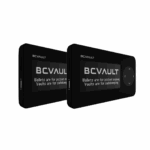 Basic Model
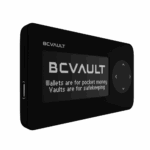 BC Vault ONE
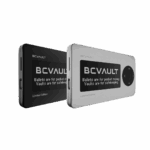 Aluminium Edition
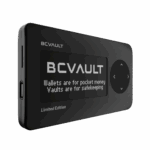 BC Vault Gunmetal
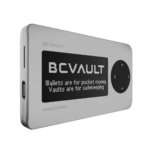 BC Vault Quicksilver
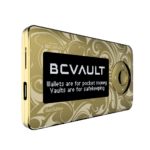 BC Vault Special Gold Edition
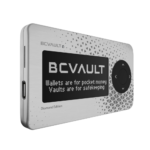 Custom BC Vault Quicksilver
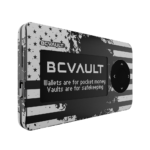 Custom BC Vault Gunmetal